

Arranged by Practice Capital, with broker Jodi Bailey. Written by Andrew Yates, Director.
A long-established accountancy practice in Essex needed a straightforward business loan.
The firm had been trading for over 20 years, with turnover just under £300,000. It wanted to borrow £25,000 over five years to support several practical business requirements:
- Cashflow while larger clients paid
- New equipment
- Marketing activity
- Office improvements
- General working capital
There was no single major purchase behind the application. The requirement was broader than that. The firm wanted an injection of cash to give the business more room to operate, invest and plan ahead.
The first route was through lenders who actively support accountancy firms and professional practices. On this occasion, however, those specialist lenders hit roadblocks and declined to make an offer.
That was not the end of the process.
Because Practice Capital has access to a wider SME lender panel through its broader brokerage, Capital Business Loans, and the SME specialist site SME Finance Hub, broker Jodi Bailey was able to explore other routes.
The result was a choice between offers from Fleximize and Funding Circle. The rates were similar. The fee structures and repayment terms were different. For this client, the longer term offered by Funding Circle suited the firm's cashflow better.
The application completed with a £25,000 facility over five years through Funding Circle.
The requirement: practical funding for an established practice
The client was not looking to fund one clearly defined asset or expansion project.
It needed flexibility.
Accountancy practices can have a steady underlying business but still experience timing gaps in their cashflow. Larger clients may pay on longer terms. Equipment and office costs need to be paid before they generate a direct return. Marketing investment can come before new work arrives.
The firm's funding requirement reflected that everyday reality.
The £25,000 facility was intended to support a combination of:
- Working capital while waiting for larger client invoices to be paid
- New equipment for the practice
- Marketing and business development
- Improvements to the office environment
- General business costs where additional cashflow was useful
This type of requirement is common across professional practice finance. The business does not necessarily need a complicated structure. It may simply need sufficient room to manage costs and make sensible improvements without every outgoing being tied to the timing of the next payment.

When the usual specialist route does not produce an offer
Practice Capital works with lenders that actively provide accountancy practice finance.
Those lenders understand many of the features of professional firms, including recurring fee income, busy periods, partner or director structures and the importance of maintaining service levels while the practice grows.
However, specialist does not mean automatic.
On this application, the initial specialist routes did not produce an offer. There were roadblocks in the underwriting process, and those lenders declined to proceed.
That is an important part of the story.
A broker should not present every case as a guaranteed approval. Some lenders will say no. A business can have a long trading history, established turnover and a sensible reason for borrowing, yet still fail to meet the exact criteria of a particular lender.
The value of using a broker with access to more than one route is that the application does not necessarily stop at the first decline.
In this case, Jodi Bailey reviewed the position and used the wider SME panel available through the wider brokerage. That created another opportunity to compare potential offers from lenders whose criteria were a better fit for the application.
A wider panel created more options
The wider panel produced offers from Fleximize and Funding Circle.
Both offers were at similar rates. Both also provided benefits if the client wanted to settle the loan early.
There were differences in the upfront fees. Funding Circle's fee was higher than Fleximize's.
On the face of it, that could have made the lower-fee option appear more attractive. But the client also needed to consider the repayment term.
Funding Circle could offer the required five-year term. That was important because spreading the repayments over a longer period suited the firm's cashflow better.
The client therefore had more to consider than the headline interest rate:
- The interest rate
- The upfront fee
- The monthly repayment
- The length of the term
- The ability to settle early
- The overall fit with the firm's expected cashflow
For this particular practice, the longer term carried more weight than simply choosing the offer with the lower upfront fee.
That does not mean a longer term is always the right answer. A shorter term may reduce the total interest paid, while a lower fee may reduce the initial cost. The right comparison depends on the firm's cash position, repayment capacity and priorities.
The point is that the full structure matters.

Similar rates do not always mean similar outcomes
Business owners often start with the interest rate when comparing finance.
It is an important part of the decision, but it is not the only part.
Two offers with similar rates can still produce different results if they have:
- Different upfront fees
- Different repayment periods
- Different monthly payments
- Different early settlement terms
- Different documentation requirements
- Different personal guarantee arrangements
In this case, the Funding Circle offer included a higher upfront fee than the Fleximize offer. However, its five-year term gave the accountancy practice a repayment profile that fitted better with its day-to-day cashflow.
That distinction was particularly relevant because the funds were being used for several purposes rather than a single asset with a fixed income attached to it.
The firm needed working capital while larger clients paid. It also wanted to invest in equipment, marketing and its office. A repayment schedule that left more room in the monthly budget was therefore a practical consideration.
The client was able to make an informed choice because several options had been explored and the differences had been discussed.
A couple of further declines
The broader SME panel did not produce universal approval either.
A couple of lenders also declined the proposal.
That is normal in commercial lending. Each lender has its own credit policy, risk appetite and approach to established businesses with different funding requirements.
The important outcome was that the application continued to be assessed across several routes rather than being judged on the response of one lender alone.
The client appreciated knowing that a number of lenders had been considered. It provided reassurance that the arrangement had not simply been accepted because it was the first available offer.
Instead, Jodi was able to compare what was available and identify a facility that worked for the firm's repayment and cashflow needs.
A straightforward online completion
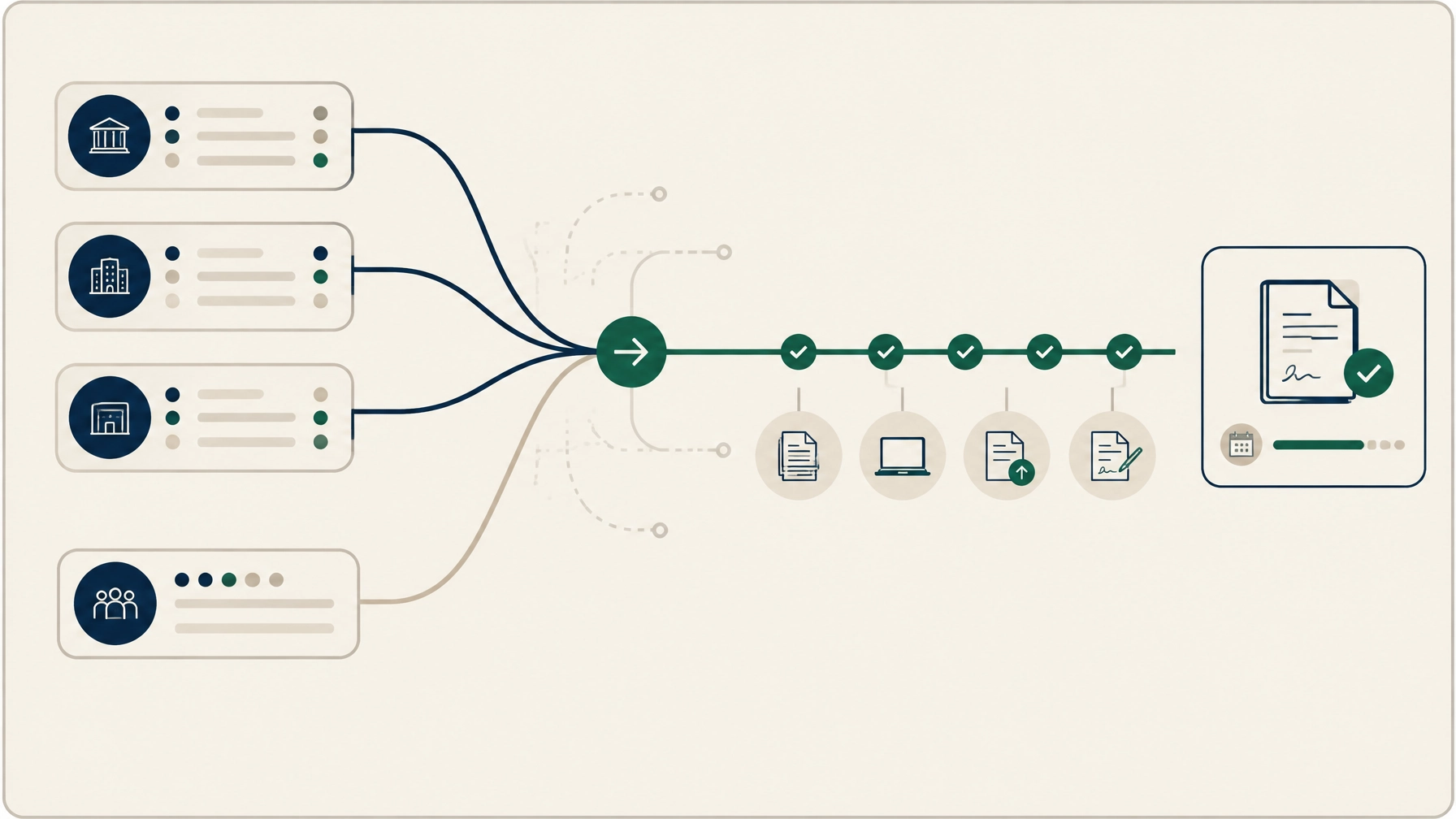
Once the client chose the Funding Circle facility, the sign-up process was completed online.
There was one practical variation. The personal guarantee document was manually printed and wet signed by the client, rather than completed digitally.
That suited the client better.
The broader process remained efficient, while allowing the firm to handle an important document in the format it preferred.
The final arrangement was:
- £25,000 business loan
- Five-year term
- Funding Circle
- Accountancy practice based in Essex
- Trading history of over 20 years
- Turnover just under £300,000
- Funding for working capital, equipment, marketing and office improvements
- Early settlement benefits available under the offer
- Personal guarantee completed using a printed and wet-signed document
The facility gave the practice an injection of cash without requiring it to wait for every larger client payment before investing in the business.
The value of a second route
The lesson from this case is not that every accountancy practice will be approved after a specialist lender declines.
It is more practical than that.
A lender may decline because the proposal does not fit its specific criteria. Another lender may view the same business differently, particularly where the loan amount, term and intended use are understood in context.
A broker with access to a broad lender panel can help by:
- Exploring specialist accountancy lenders first
- Reviewing alternative SME lenders when required
- Comparing upfront fees as well as rates
- Considering the effect of different repayment terms
- Explaining the practical impact on cashflow
- Giving the client a clearer choice before proceeding
For this Essex accountancy practice, the specialist route did not produce an offer. The wider panel did.
The final decision was based on more than the headline rate. The client considered the fee, the five-year term, the repayment profile and the ability to settle early. That gave the firm a funding structure aligned with its immediate business requirements.
Practice Capital is an independent, FCA-regulated credit broker, not a lender. We arrange professional practice loans and accountancy practice finance through a range of lenders. There are no upfront broker fees; any lender fees and arrangement costs are explained as part of the offer.
If your accountancy practice needs working capital, equipment finance, marketing funding or cashflow support while clients pay, you can explore accountancy practice finance, start a confidential enquiry or speak to a specialist broker.
A short enquiry allows us to understand the requirement, review the available routes and point you in the right direction. It is indicative and non-binding.